
Magnetic separation is the process of separating components of mixtures by using magnets to attract magnetic materials.[1] The process that is used for magnetic separation detaches non-magnetic material with those that are magnetic. This technique is useful for not all, but few minerals such as ferromagnetism/ferromagnetic (materials strongly affected by magnetic fields) and paramagnetic (materials that are less affected) but the effect is still noticeable).[2] Not all metals are magnetic; gold, silver and aluminum are some examples.
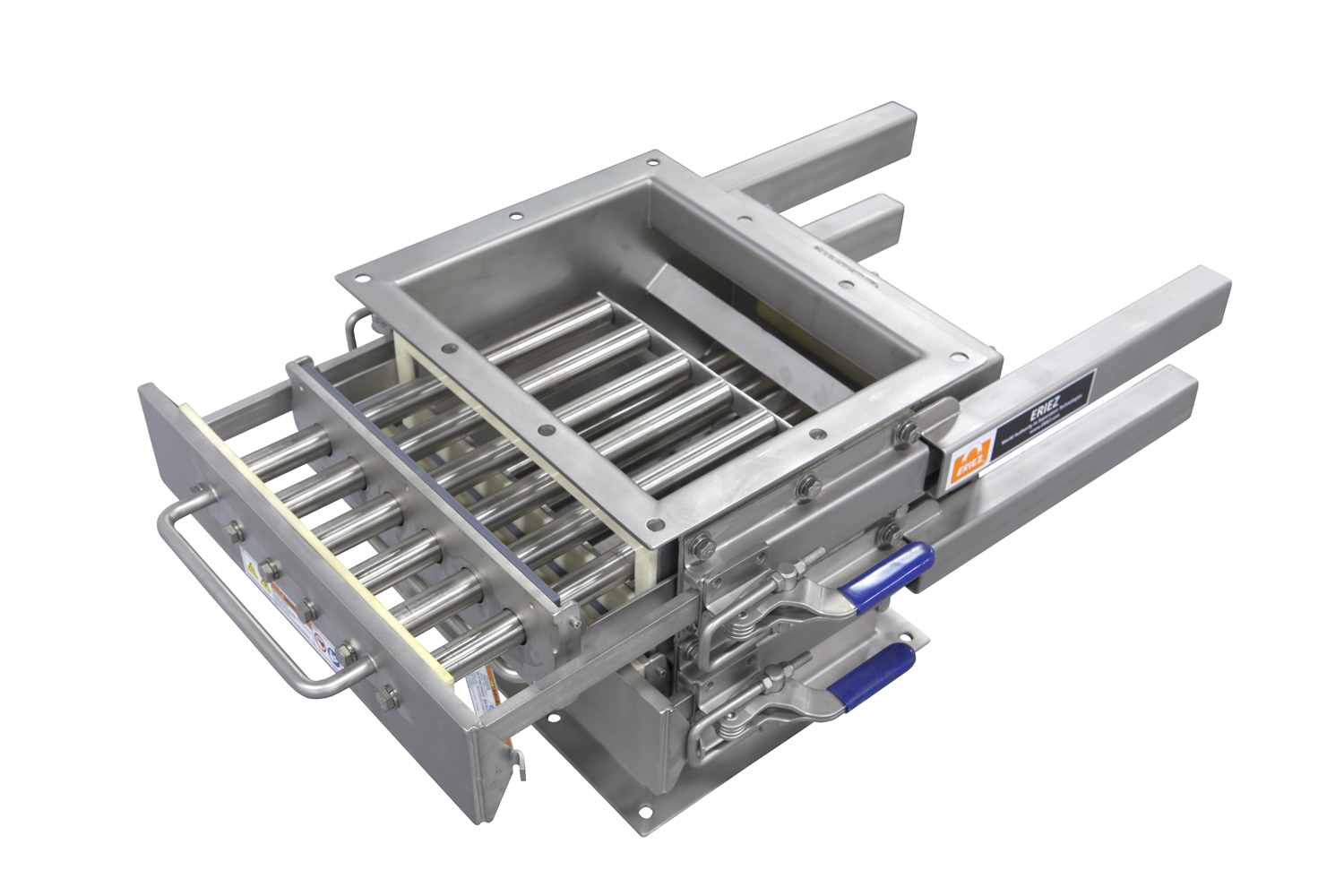
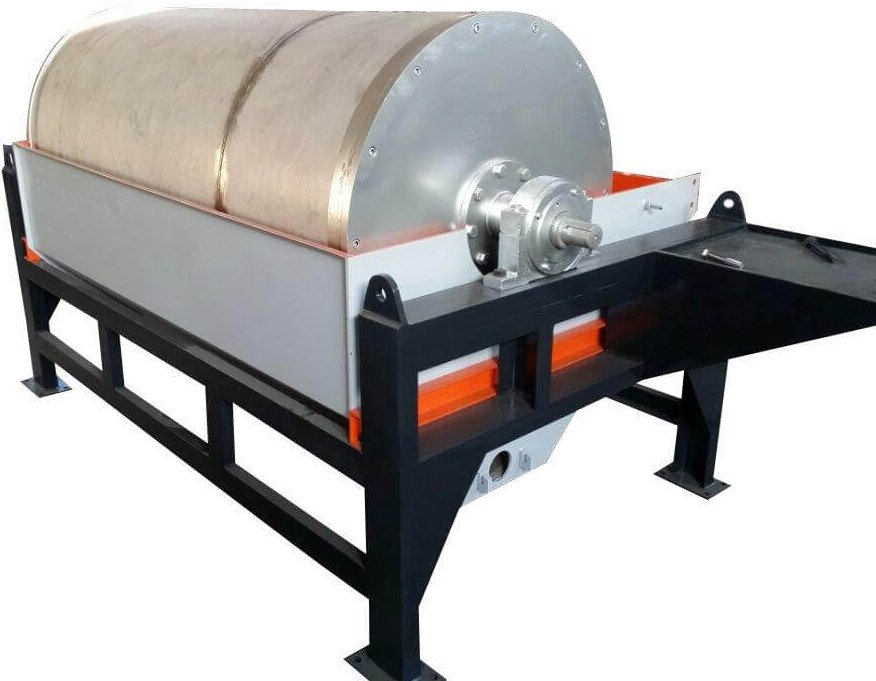
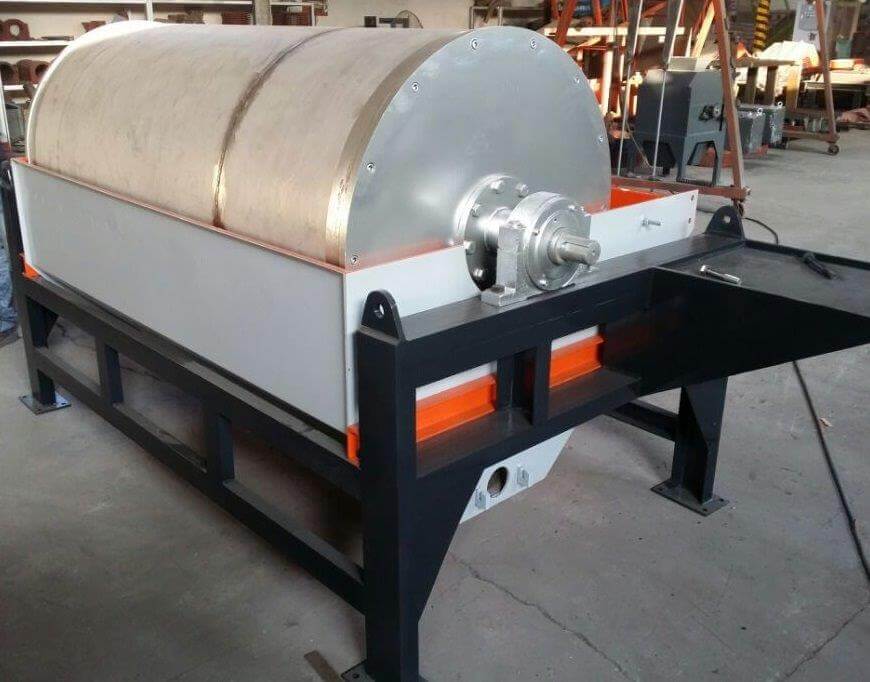
Multotec supplies a complete range of magnetic separation equipment for separating ferromagnetic and paramagnetic particles from dry solids or slurries, or for removing tramp metal. Multotec Dry and Wet Drum Separators, WHIMS, Demagnetising Coils and Overbelt Magnets are used in mineral processing plants across the world. We can engineer customised magnetic separation solutions for your. A plate separator is a magnetic plate mounted inside a chute. The magnetic field’s strength is concentrated away from the magnet surface. As material slides down the chute, the magnetic field reaches out into the flowing material. This attracts ferrous contaminants to.
A large diversity of mechanical means are used to separate magnetic materials.[2] During magnetic separation, magnets are situated inside two separator drums which bear liquids. Due to the magnets, magnetic particles are being drifted by the movement of the drums. This can create a magnetic concentrate (e.g. an ore concentrate).[2]
History[edit]
Michael Faraday discovered that when a substance is put in a magnetic environment, the intensity of the environment is modified by it.[3] With this information, he discovered that different materials can be separated with their magnetic properties. The table below shows the common ferromagnetic and paramagnetic minerals as well as the field intensity that is required in order to separate those minerals.[3]
| Mineral | Formula | Field Strength (kG) | |
|---|---|---|---|
| Ferromagnetic | Magnetite | 1 | |
| Pyrrhotite | 0.5 - 4 | ||
| Paramagnetic | Ilmenite | 8 - 16 | |
| Siderite | 9 - 18 | ||
| Chromite | 10 - 16 | ||
| Hematite | 12 - 18 | ||
| Wolframite | 12 - 18 | ||
| Tourmaline | 16 - 20 |
In the 1860s, magnetic separation started to become commercialized. It was used to separate iron from brass.[3] After the 1880s, ferromagnetic materials started to be magnetically separated. In the 1900s, high intensity magnetic separation was inaugurated which allowed the separation of pragmatic materials.[3] After the Second World War, systems that were the most common were electromagnets. The technique was used in scrap yards. Magnetic separation was developed again in the late 1970s with new technologies being inaugurated.[2] The new forms of magnetic separation included magnetic pulleys, overhead magnets and magnetic drums.
In mines where wolframite was mixed with cassiterite, such as South Crofty and East Pool mine in Cornwall or with bismuth such as at the Shepherd and Murphy mine in Moina, Tasmania, magnetic separation is used to separate the ores. At these mines, a device called a Wetherill's Magnetic Separator (invented by John Price Wetherill, 1844–1906)[4] was used. In this machine, the raw ore, after calcination was fed onto a conveyor belt which passed underneath two pairs of electromagnets under which further belts ran at right angles to the feed belt. The first pair of balls was weakly magnetized and served to draw off any iron ore present. The second pair were strongly magnetized and attracted the wolframite, which is weakly magnetic.[4] These machines were capable of treating 10 tons of ore a day.
Common applications[edit]

Magnetic separation can also be used in electromagnetic cranes that separate magnetic material from scraps and unwanted substances.[1] This explains its use for shipment equipments and waste management. Unwanted metals can be removed from goods with this technique. It keeps all materials pure.[1] Recycling centres use magnetic separation often to separate components from recycling, isolate metals, and purify ores.[1] Overhead magnets, magnetic pulleys, and the magnetic drums were the methods used in the recycling industry.[1]
Magnetic separation is also useful in mining iron as it is attracted to a magnet.[3]
Another application, not widely known but very important, is to use magnets in process industries to remove metal contaminants from product streams.[1] This takes a lot of importance in food or pharmaceutical industries.
Magnetic separation is also used in situations where pollution needs to be controlled, in chemical processing, as well as during the benefaction of nonferrous low-grade ores.[1]
Magnetic separation is also used in the following industries: dairy, grain and milling, plastics, food, chemical, oils, textile, and more.
Magnetic cell separation[edit]
Magnetic cell separation is on the rise. It is currently being used in clinical therapies, more specifically in cancers and hereditary diseases researches.[5] Magnetic cell separation took a turn when, Zborowski, an Immunomagnetic Cell Separation (IMCS) pioneer, analyzed commercial magnetic cell separation. Zborowski uncovered crucial revelations that were then used, and are still used today, in the human understanding of cell biology.[5] Today, the manufacture of therapeutic products concerning cancers and genetic diseases, are being innovated due to these discoveries.[5]
In microbiology[edit]
Magnetic separation techniques are also used in microbiology. In this case, binding molecules and antibodies are used in order to isolate specific viable organisms, nucleic acids, or antigens.[6] This technology helps isolating bacterial species to identify and give diagnostics of genes targeting certain organisms.[6] When magnetic separation techniques are combined with PCR (polymerase chain reaction), the results increase in sensitivity and specificity.[6]
Magnetic Separator Coal
Magnetic filters are fitted on the boiler’s pipework to collect magnetite from the circulating water before it has a chance to build up and lower the efficiency of the heating system. The water circulating around the heating system picks up bits of sludge (or magnetite) which can build up. The magnetic filter attracts all these bits of debris with a strong magnet as the water flows around it, preventing a build-up of sludge in the pipework or in the boiler.[7]
Magnetic Separator Pdf
Low-field magnetic separation[edit]
Low-field magnetic separation is often in environmental contexts such as water purification and the separation of complex mixtures.[8] Low magnetic field gradients are field gradients that are smaller than one hundred tesla per meter.[8] Monodisperse magnetite () and nanocrystals () are used for this technique.[8]
Weak magnetic separation[edit]
Weak magnetic separation is used to create cleaner iron-rich products that can be reused.[9] These products have low levels of impurities and a high iron load. This technique is used as a recycling technology.[9] It is coupled with steelmaking slag fines as well as a selection of particle size screening.[9]
Equipments[edit]
With today's technology advances, a variety of equipments is available to perform magnetic separation.[10] Grates, plate magnets, magnet housing, basic cartridges, pulleys, drums, and self-cleaning separators are designed to separate metals with either gravity, pneumatic, or magnetic conveying systems.[10]
References[edit]
- ^ abcdefghttps://www.powderprocess.net/Equipments%20html/Magnets.html
- ^ abcdOberteuffer, J. (1974). 'Magnetic separation: A review of principles, devices, and applications'. IEEE Transactions on Magnetics. 10 (2): 223–238. Bibcode:1974ITM....10..223O. doi:10.1109/TMAG.1974.1058315.
- ^ abcdeBronkala, William J. (2000-06-15), 'Magnetic Separation', Ullmann's Encyclopedia of Industrial Chemistry, Wiley-VCH Verlag GmbH & Co. KGaA, doi:10.1002/14356007.b02_19, ISBN3527306730
- ^ ab'Historical Markers - Samuel Wetherill'. ExplorePAhistory.com. Retrieved 2012-08-20.
- ^ abcBrown, William H (1995). 'Trends in patent renewals at the United States patent and trademark office'. World Patent Information. 17 (4): 225–234. doi:10.1016/0172-2190(95)00043-7. ISSN0172-2190.
- ^ abcOlsvik, O; Popovic, T; Skjerve, E; Cudjoe, K S; Hornes, E; Ugelstad, J; Uhlén, M (1994). 'Magnetic separation techniques in diagnostic microbiology'. Clinical Microbiology Reviews. 7 (1): 43–54. doi:10.1128/cmr.7.1.43. ISSN0893-8512. PMC358305. PMID8118790.
- ^What is a magnaclean filter? (page visited on 14 March 2020)
- ^ abcYavuz, C. T.; Mayo, J. T.; Yu, W. W.; Prakash, A.; Falkner, J. C.; Yean, S.; Cong, L.; Shipley, H. J.; Kan, A. (2006-11-10). 'Low-Field Magnetic Separation of Monodisperse Fe3O4 Nanocrystals'. Science. 314 (5801): 964–967. doi:10.1126/science.1131475. ISSN0036-8075. PMID17095696. S2CID23522459.
- ^ abcMa, Naiyang; Houser, Joseph Blake (2014). 'Recycling of steelmaking slag fines by weak magnetic separation coupled with selective particle size screening'. Journal of Cleaner Production. 82: 221–231. doi:10.1016/j.jclepro.2014.06.092. ISSN0959-6526.
- ^ abMagnetics, Bunting. 'Magnetic Separation Equipment | Bunting Magnetics'. Bunting Magnetics Co. Retrieved 2019-04-04.
Magnetic Separators For Coolant
Magnetic and non-ferrous metal separators from STEINERT perfectly satisfy efficiency requirements for the accurate separation of primary and secondary raw materials. Tried-and-tested machines are available for diverse applications ranging from sorting scrap material and waste to mining applications. We offer a large selection of pulley, drum, lift-out and overhead suspension magnets – for both dry and wet processing.
As the inventor of the eccentric eddy current separator, even today STEINERT still has the best technology on the market for separating non-ferrous metals.
If a tight installation space requires a compact machine, then our combination separators with several magnetic sorting stages are the ideal solution. For example, the STEINERT FinesMaster directly combines two serial magnetic separators with one eddy current separator, producing an incredibly efficient and compact machine solution.
And for fine-range separation work, we offer the high-gradient magnetic separator STEINERT HGS, a compact system developed as a single- or multi-stage machine.